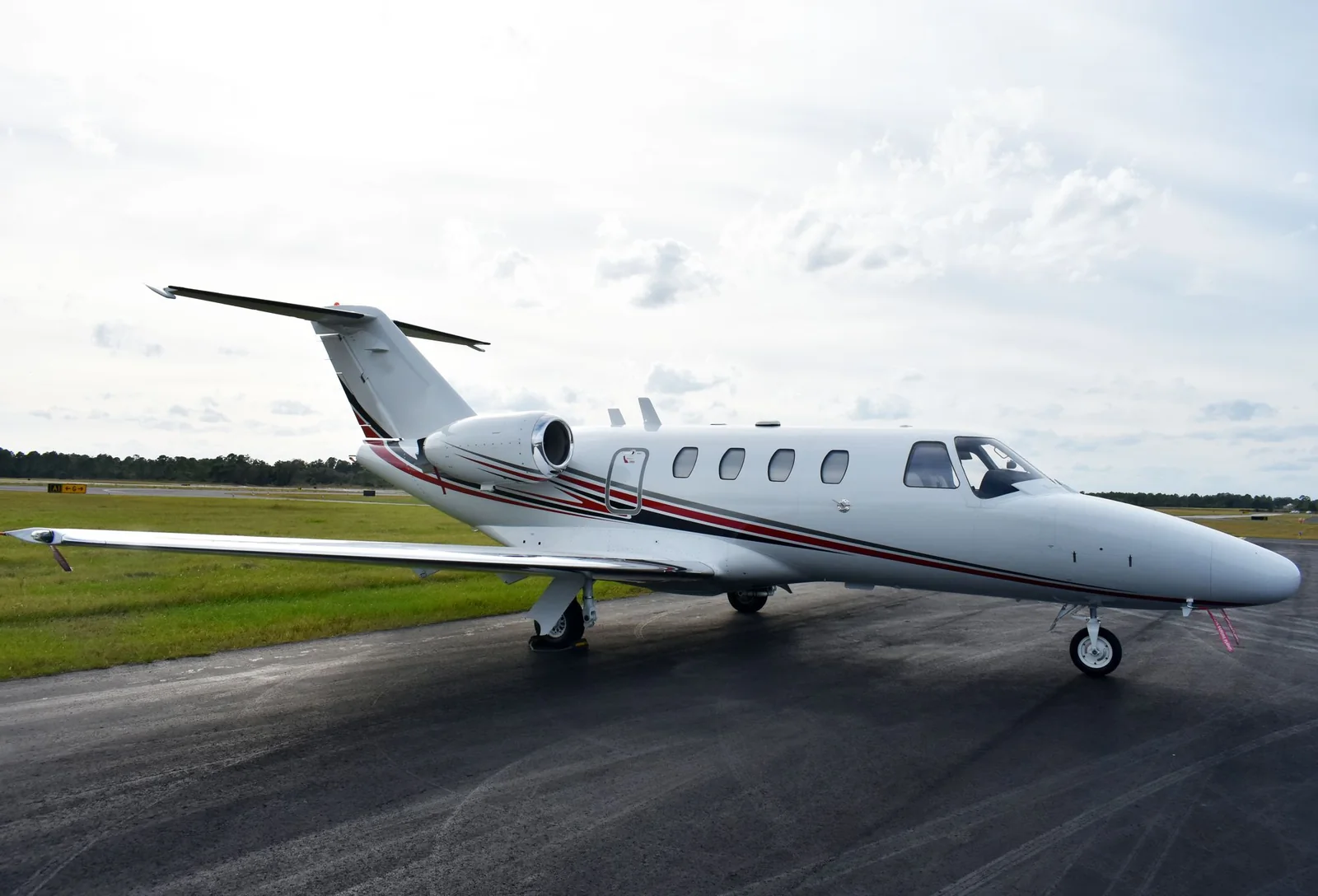
Disclosure: Exclusive Jet Charter is an independent information and comparison guide. We may earn a commission if you request a quote or book through our partner links, at no extra cost to you. We do not operate aircraft or sell flights. Read our affiliate disclosure.
Most first-time charter clients are choosing between a light jet and a midsize jet. The names describe cabin class, not a single airplane. Get the class right, and the trip feels uneventful in the best way: enough seats and bags, a comfortable cabin, and a nonstop flight. Get it wrong, and you either overpay for space you do not need or spend the day in a cabin that is tight, noisy, or short on range.
This comparison stays with those two classes — the ones that cover a large share of domestic U.S. charter missions — and uses published 2026 rate ranges rather than invented “average†prices.
Quick comparison
| Light jet | Midsize jet | |
|---|---|---|
| Typical passenger guide | About 6, sometimes fewer in very light jets; some “super light†cabins seat more | About 7–8, sometimes 9 |
| Typical mission | Regional trips of roughly two to three hours | Longer regional or half-continent trips, often three to five hours |
| Cabin | Often a sit-down cabin; less room to stand and move | Many models offer stand-up or near stand-up headroom and a more usable aisle |
| Baggage | Adequate for light travelers; can be tight with sports gear or lots of roll-aboards | Meaningfully more baggage volume on most aircraft |
| Lavatory | Varies; some light jets are compact | More often a fully enclosed lavatory |
| Cost (Stratos all-in hourly, Nov 2026) | About $7,622–$9,316 (light); super-light about $7,740–$9,460 | About $8,300–$10,144 |
| Example aircraft | Citation CJ3, Phenom 300 (often grouped as light or super-light, depending on the broker), Learjet 70/75 | Citation XLS+/Latitude, Hawker 800XP, Learjet 60 |
Passenger counts and ranges are typical planning guides, not certified limits. The usable payload on the day depends on the specific aircraft, fuel needed, runway, weather, and how much bags and passengers weigh.
What you get in a light jet
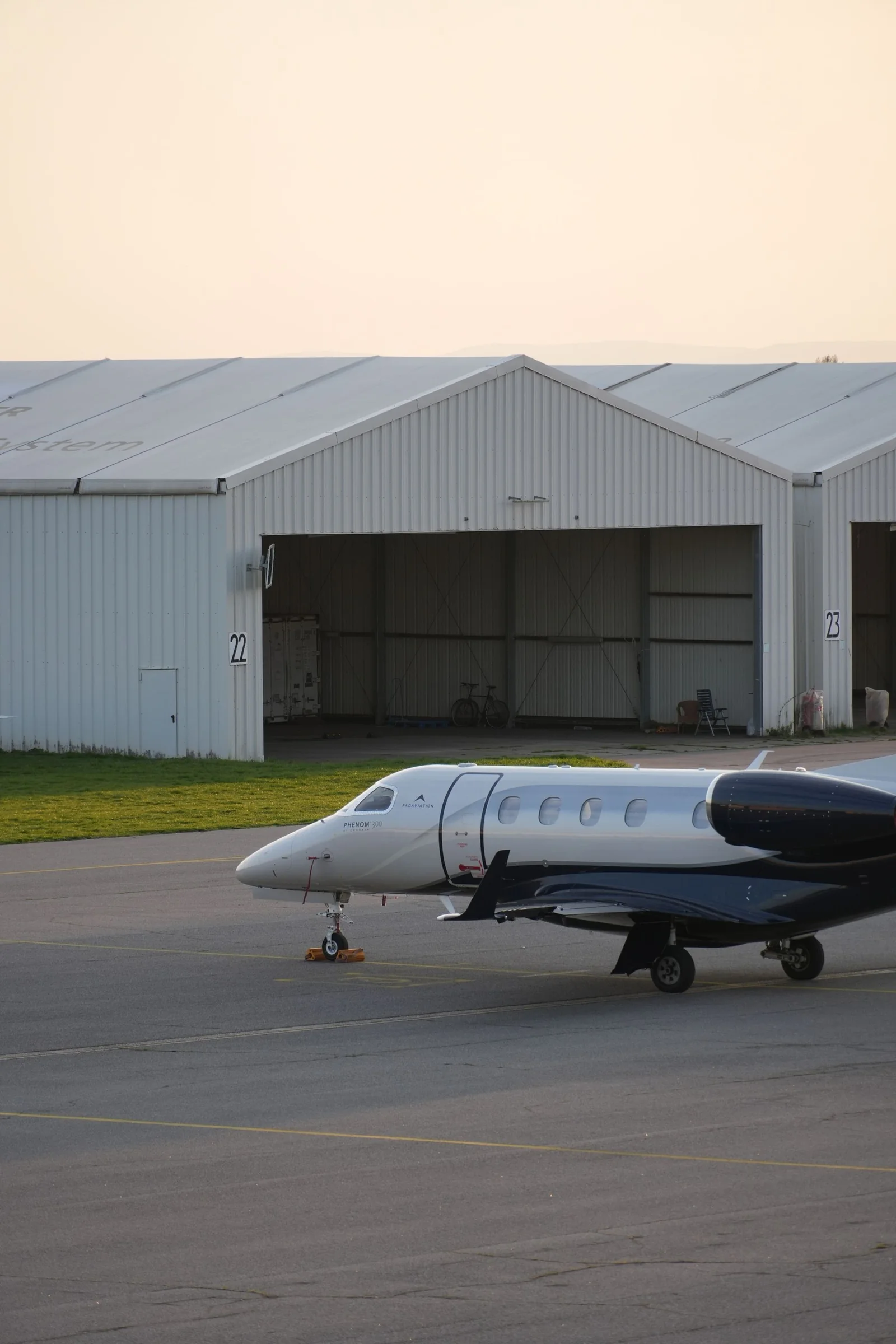
Light jets are the workhorses of shorter private trips. They are built to take a small group between cities a few hundred to around a thousand nautical miles apart, often into runways that a larger cabin cannot use as easily. For two to four travelers with modest luggage, a light jet is frequently the most efficient cabin: enough speed for regional missions, lower fuel burn than a midsize jet, and a lower charter rate.
The trade-offs are space and endurance. Many light-jet cabins are not full stand-up. That is fine for a 90-minute hop. It is more noticeable on a three-hour flight if you want to work, change, or move around. Baggage bays can fill up quickly with golf bags, camera cases, or winter gear. And if the route is long, a light jet may need a fuel stop that a midsize jet can skip — which can erase both the time advantage and some of the cost advantage.
Brokers do not always draw the line in the same place. The Embraer Phenom 300, for example, is often sold as a “super light†jet: light-jet economics with more cabin and range than the smallest light jets. When you compare quotes, look at the actual model, seating, and whether the flight is planned nonstop, not only at the class label.
What you get in a midsize jet
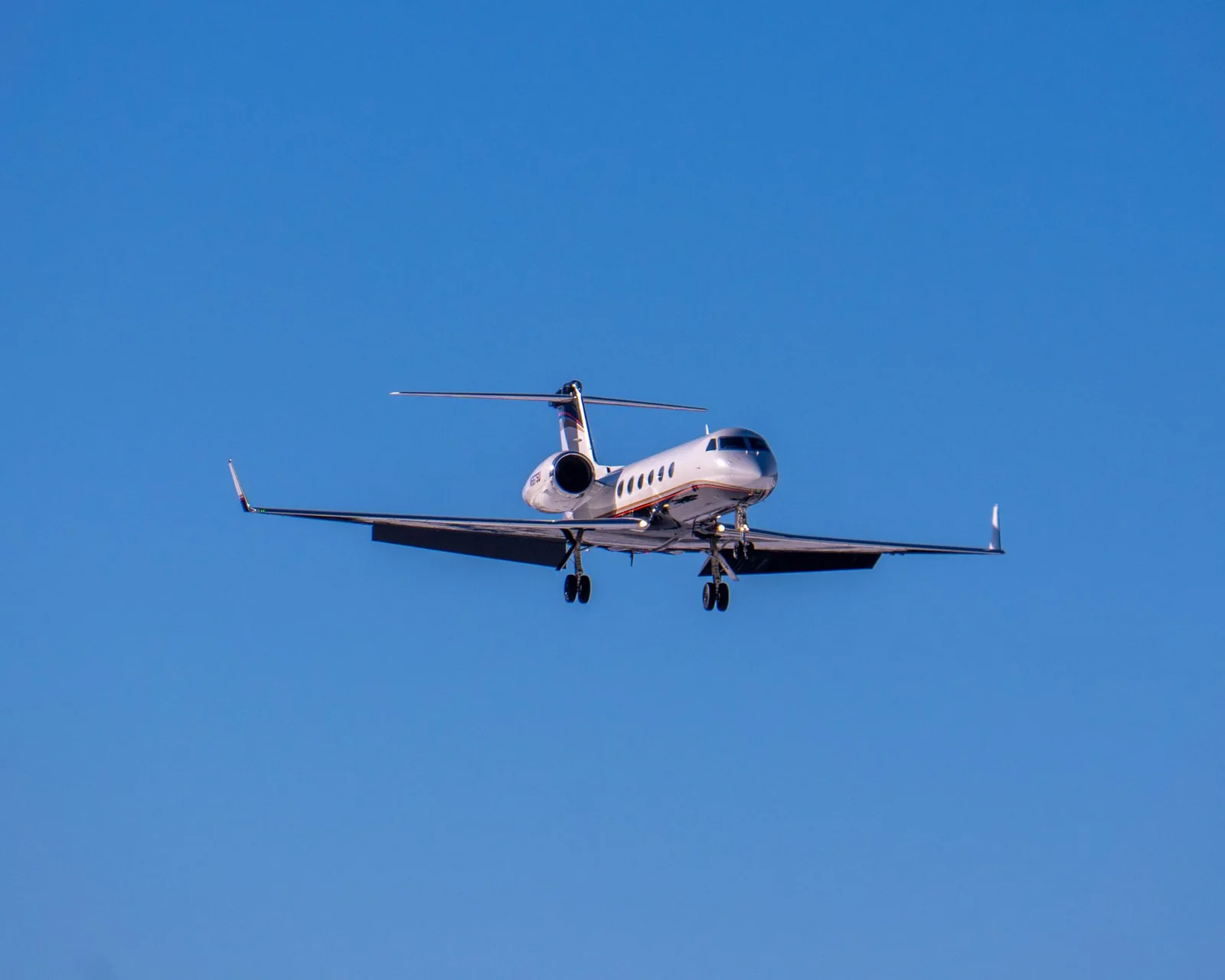
Midsize jets add cabin volume, baggage capacity, and range. Many have a stand-up or near stand-up cabin, a proper enclosed lavatory, and a club seating layout that is easier to work or talk in. That matters when six or seven people are traveling together, when the flight is long enough that comfort affects how you arrive, or when you are carrying more than a weekend’s worth of bags.
Range is the other reason to step up. Midsize jets are commonly used for longer U.S. sectors that are uncomfortable or impossible nonstop in a smaller light jet. Stratos’s 2026 category guide, for example, describes midsize jets as suited to roughly 1,750 nautical miles of typical range, versus about 1,000 for a light jet — always subject to the specific airplane and conditions. Super-midsize jets go further still and are a different (more expensive) conversation if you need coast-to-coast nonstop with a larger group.
You pay for that capability. The hourly rate is higher, and fuel burn and some airport fees can be higher too. If your trip is a short hop with three passengers and carry-ons, a midsize cabin can be more jet than you need.
How the cost difference really shows up
Stratos Jets’ November 2026 all-in retail estimates — which the company says include crew, fuel, repositioning, U.S. federal excise tax, and standard landing and handling — put light jets at about $7,622–$9,316 per hour and midsize jets at about $8,300–$10,144 per hour. On a two- to three-hour trip, that gap can be a few thousand dollars, not a different order of magnitude.
Route examples make the difference more concrete. Paramount Business Jets, in figures it said were verified in August 2026, listed New York–Miami one-way estimates of about $17,000–$20,000 in a light jet and $23,000–$27,000 in a midsize jet (with a “super light†band in between). Stratos’s November 2026 New York–Miami estimates start around $18,600–$25,900 in a light jet and $22,000–$29,100 in a midsize jet. Those are not identical baskets of assumptions, which is itself the point: ask each broker what is included.
On shorter routes, the gap can narrow in surprising ways. Daily minimums and positioning affect both classes. A midsize jet that is already at your departure airport can, on a given day, price closer to a light jet that has to be flown in. Conversely, a midsize quote can jump if the only available aircraft is coming from far away. Compare all-in totals for your dates, not just the brochure hourly rate.
Empty legs can also flip the comparison. If a midsize jet has to reposition along your route, the discounted empty-leg price might undercut a full-price light jet. That only works if you can accept the schedule risk that comes with empty-leg flights.
How to choose for your trip
Work through the mission in this order, rather than starting with a favorite aircraft name:
- People and bags. Count passengers and describe luggage honestly. If you are at the top of a light jet’s comfortable load, look at midsize (or a super-light jet) before you try to make a smaller cabin work.
- Distance and alternates. Ask whether the proposed aircraft can fly your city pair nonstop with your payload, in typical winds, with a sensible fuel reserve. A cheap light-jet quote that includes a fuel stop is not cheaper in time.
- Airports. One reason people charter is to use closer reliever airports. Confirm that the aircraft can use the runways you actually want, especially in hot weather or at higher elevations.
- How you want to spend the flight. If the cabin will be a working meeting, or a family trip long enough that people will get up, midsize comfort is easier to justify.
- Budget as an all-in number. Use the 2026 hourly bands above as a sense check, then choose on the quoted total for the aircraft that can do the trip cleanly.
A turboprop is worth a look on short, runway-constrained, or baggage-heavy trips, and a super-midsize or heavy jet is the next step when you need coast-to-coast or transoceanic range or a much larger cabin. Those classes are outside this comparison, but the same rule applies: match the airplane to the mission.
Frequently Asked Questions
Is a midsize jet always more expensive than a light jet?
Usually, yes, on a like-for-like on-demand charter, because the aircraft is larger and costs more to operate. It is not guaranteed on every date. Positioning, demand, and empty legs can close or even reverse the gap. Compare all-in quotes for the same itinerary.
Can a light jet fly coast to coast?
Some light and super-light jets can cover long U.S. routes with the right winds and a light load, but many coast-to-coast charters are planned in super-midsize or larger cabins to stay nonstop with a comfortable reserve. If a coast-to-coast nonstop matters, ask for the performance on that specific aircraft and payload, not a generic class claim.
How many people should switch from a light jet to a midsize jet?
There is no official cutoff. As a planning rule, once you are consistently filling six seats with real baggage, or the flight is long enough that cabin space matters, you should price a midsize (or super-light) option. Comfort and baggage, not only the seat count in a brochure, should decide it.
Do I get a better safety standard in a midsize jet?
Safety depends on the operator, the specific aircraft’s maintenance, the crew, and the mission planning — not on the cabin marketing name. Ask who the Part 135 operator is and what third-party audits (such as ARGUS or Wyvern) they hold, regardless of cabin class.
Which class is better for a two-hour trip?
If the passenger and bag count fit, a light jet is often the more economical and perfectly adequate choice for about two hours. Choose midsize when you need the space, the baggage, or the range, or when the midsize quote is close enough that the extra cabin is worth it.
Key takeaways
Charter a light jet for smaller groups, shorter regional flights, and lighter baggage. Step up to a midsize jet when you need more cabin, more bags, or a more comfortable nonstop on a longer sector. In Stratos Jets’ November 2026 all-in data, the hourly gap between those classes is real but measured in thousands of dollars per hour, not a doubling of the bill. Let the itinerary, payload, and an all-in quote — not the class label alone — pick the aircraft.
Request a quote
Exclusive Jet Charter is an independent guide and does not operate or sell flights. When you are ready to request a trip quote, start on our Request a Quote page. Until a partner quote form is approved, that page will direct you to Contact.